All in once PC's are typically a monitor with all the common technology located inside the monitor rather than a separate unit, the iMac is a prime example of such a design. Monitors are not upgraded all that often so this approach appears to be logical, and great in terms of space. Now, how about an all in one PC which stores the separate unit not inside the monitor but inside the keyboard? It may sound like impossible, but the keyboard essentially is the same size as a laptop and opens up in a similar fashion. On the positive side, in comparison with the iMac, the keyboard all in one package allows for you to upgrade your monitor without having to upgrade the entire system.

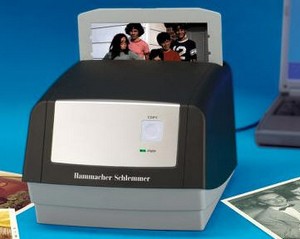
Photographs are, for some of us, our most prized possessions allowing memories to be taken in a snapshot, saved and shared. With the digital age now upon us, storing images and pictures onto digital media is much preferred to preserve photographs and memories, ensuring that you have a backup and cannot be damaged by lying around in a box. Transforming normal photographs into their digital equivalents is no easy task, but it has now been made easy thanks to the USB Photo Scanner. Armed with a 5 Mega-pixel CMOS sensor, scanning a photo takes a few minutes, much faster than most modern scanners. As you filter each photograph into the tray and slide them into the converter.
The idea of an internet hotspot on wheels might sound far-fetched. But one of the products on show at CES can turn any vehicle into a wi-fi zone.
The newly invented gadget called SpeedRay 3000 developed by RaySat is a round, low profile antenna designed to go on the roof of a vehicle and access satellite TV and broadband. The system is said to provide an always-on connection on the move, using GPS technology to track the location of a satellite. Inside, the antenna rotates and tilts to adjust its position.
"As long as you have line of sight to the satellite, you are fine," said RaySat's Lynette Henley, adding that the signal would drop somewhere like New York because of the skyscrapers.
People who own motor homes are seen as the main audience for the system, as well as the emergency services and the military. But communication on the go comes at a high price, with the antenna costing $7,000, together with monthly subscription costs. It is due to go on sale in the US in the summer.

Video game makers often talk about creating immersive games where players can lose themselves in virtual worlds. A company called eMagin believes the answer lies not so much in the games, but in how they are viewed. It has come up with a 3D visor that uses two micro displays to create a stereo vision of a game. The headset has a tracking system using gyroscopes that lets players look around a game by moving the head from side to side. "It is a much more immersive experience than looking at a big screen," said eMagin's Bruce Ridley. "Most PC games will work with it," he said, adding it would also work on the new Microsoft Xbox 360. The company is talking to all the major console makers about the headset. "Nintendo has even purchased some," said Mr Ridley. The company has been selling the headset via its website since July.

GPS technologies nowadays are normally associated with satellite navigation systems. But others are still looking at innovative ways of tapping into the potential of GPS. But the Celestron Company has taken its background in making
Stargazers will find answers with this celestial gadget telescopes, to come up with a handheld gizmo that can identify thousands of objects in the sky.
They call it the SkyScout where it uses GPS technology to work out the location of celestial objects that can be seen with the naked eye and find out what it is you are looking out. The unit has a built-in database with some 6,000 entries. But it can be updated via its USB port or the SD memory card slot. It is now possible that stargazers will find answers with this celestial gadget.
"It is like a planetarium except that you are actually looking at the stars and there is a new comet discovered, you can download the information from our website," said Celestron's Jennifer Adams.
The Celestron’s Skyscout product has been in development for three years and is expected to hit the shops in the US in March.